How to get a website for your business
A guide for new entrepreneurs on what a business website actually requires. We cover the domain, the hosting, the site itself and email, and the order that causes the least wasted work.
Tips and news about websites, hosting and digital business
A guide for new entrepreneurs on what a business website actually requires. We cover the domain, the hosting, the site itself and email, and the order that causes the least wasted work.

Before registering a domain it is worth checking whether it is free. We explain how to check domain availability and what to do if it is taken.
Hosting speed affects visitor experience and search visibility. We explain which factors decide it and how to choose fast web hosting.
Linux and Windows are the two operating system options for a virtual server. We compare the differences and explain which one web use typically suits.
Web hosting is easy and managed, a virtual server gives guaranteed resources and full control. We compare the options and help you choose.
A virtual private server, VPS, gives you an isolated server environment and full control. We explain what a VPS is, how it differs from web hosting and what it suits.
DNS is the address book of the internet that turns domain names into server IP addresses. We explain how name servers and name resolution work.
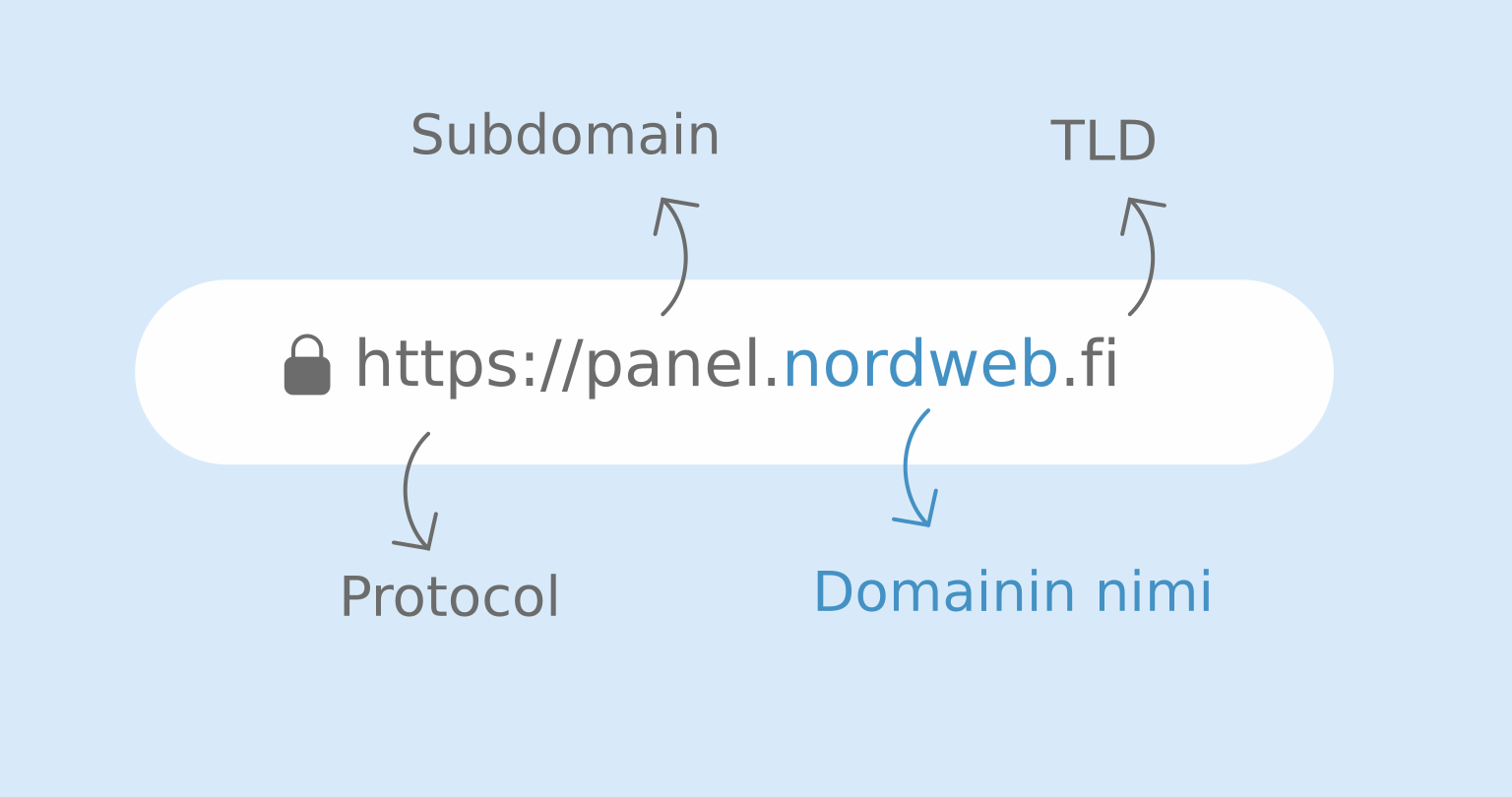
A URL is the full address of a web page in your browser. We explain what it is made of, how it differs from a domain name and what https means.
cPanel is the long-standing standard for web hosting, but new container-based panels like Enhance are challenging it. We explain how the panels differ and why we chose Enhance.
An SSL certificate encrypts the traffic between your site and the visitor and shows a padlock in the browser. We explain how SSL works and how to get it in use.
A domain is a website's address. We explain what a domain is made of, what you need it for and how to get one.
Starting a blog can be done in an evening. We explain how to choose a platform, why your own domain is worth it and how to attract readers to your blog.
A landing page is a page focused on a single goal, where a visitor is directed from an advert or a search. We explain how to build a landing page that works.
Good website design starts from the goal, not the look. We go through the stages of design, from structure to content to the technical foundation.
You can set up an online shop either as a turnkey service or build it yourself with WooCommerce. We explain what it takes, what it costs and how to avoid the most common mistakes.
Changing your domain registrar takes just a few minutes with a transfer key and no downtime. We explain where to get the key and how the transfer proceeds step by step.
Web hosting is server space where a website and emails are located. We explain what web hosting includes, how it differs from a domain and what kind of package is enough.
Want to know whose domain it is or whether a domain name is free? We explain how a whois search works, where to find .fi domain details and what to do if the name is taken.
Email on your own domain looks professional and stays in your own hands. We explain what setting up the address firstname@yourcompany.fi requires and what it costs.
A domain name's price is made up of the registry fee, the registrar's service fee and value added tax. We explain what a domain's real cost consists of and how to spot hidden charges.
Traficom administers .fi domain names, but registration is always handled through a registrar. We explain how .fi domain registration, transfer and management work in practice.
Migrating a WordPress site to a new server can be done safely with the right instructions. We go through three different migration methods, the most common mistakes and how to make sure nothing gets lost.
A .fi domain is the best choice for a Finnish company. Learn how registration works, what it costs, who can register and why .fi is better than .com for domestic websites.
Nordweb offers Finland's only genuinely free web hosting with no time limit. Learn who free hosting suits, what it includes and how to publish your site in minutes.
Google's algorithms favour fast-loading websites. We explore how site performance affects rankings and what you can do to improve the situation.
Artificial intelligence is changing the way websites are built and maintained. We explain how the latest tools help entrepreneurs manage their site without coding skills.
How do you choose the right web hosting for your business? This guide walks through the hosting types, the most important features and pricing, and helps you find the best solution for your site.
Switching email providers is not hard once you know what to do. This guide walks through the steps of an email migration, the most common pitfalls and how to ensure uninterrupted service.
Free or paid website for your business? We compare the options, go through the hidden costs and tell you when free is enough and when it pays to invest.
Did you know that some domain search engines can steal the domain name you want? Learn what domain frontrunning is, how to recognise dishonest services and how to register a domain safely.
When a customer searches for a service right now and nearby, they are most likely already ready to buy. Local SEO makes sure your business shows up when your neighbor is looking for your services.
SEO, or search engine optimization, refers to the measures taken to improve visibility in search engines. Here is a comprehensive guide to the basics of search engine optimization.
A user reads the content of a page for only about 15 seconds. Images are a website's most important visual element and an effective sales tool.
About 62-90% of a consumer's first impression of a product comes from colour alone. In this guide we go through colour psychology, colour harmony and practical tips.
Managed hosting means that the service provider handles the technical maintenance tasks for you. Learn what it includes, who it suits and what it costs.
Traditional hosting services are still in use, but more and more companies are moving to cloud-based solutions. Five key reasons why.